Accelerating Polysulfide Redox Kinetics via the Metal–Insulator Interface in a Binder-Free Separator for Long-Life Lithium–Sulfur Batteries
Jin Luo, Moon Young Yang, Yuhe Mu, Zhongjiu Yang, Boris V. Merinov, William A. Goddard III, Yue Zhou
Abstract
The sluggish bidirectional reaction kinetics of lithium polysulfides (LiPSs) and the severe shuttle effect continue to impede the commercialization of lithium–sulfur (Li–S) batteries. Herein, a binder-free separator featuring an in situ formed W 2 N-WO 3 metal–insulator interface is developed to address these issues systematically. By precisely controlling the coating process, W 2 N and WO 3 are codeposited on a carbon-coated glass fiber (C/GF) substrate to produce a robust and uniform film. The heterojunction generates an internal electric field at the interface, facilitating spontaneous electron transfer and accelerating sulfur redox reactions. Theoretical calculations further validate that the W 2 N-WO 3 heterostructure improves the redox kinetics of liquid–solid conversion and enhances the absorption of long-chain LiPSs. Li–S cells employing W 2 N-WO 3 /C/GF binder-free separators exhibit an excellent rate capability and cycling stability. The Li–S pouch cell also maintains reversible capacity under bending conditions, demonstrating reliable mechanical integrity. These results illustrate the effectiveness of heterojunction engineering in regulating LiPS adsorption and catalysis for binder-free separators in high-performance Li–S batteries.
Group Members

William A. Goddard III
Charles and Mary Ferkel Professor of Chemistry, Materials Science, and Applied Physics; Director, Materials and Process Simulation Center, Caltech
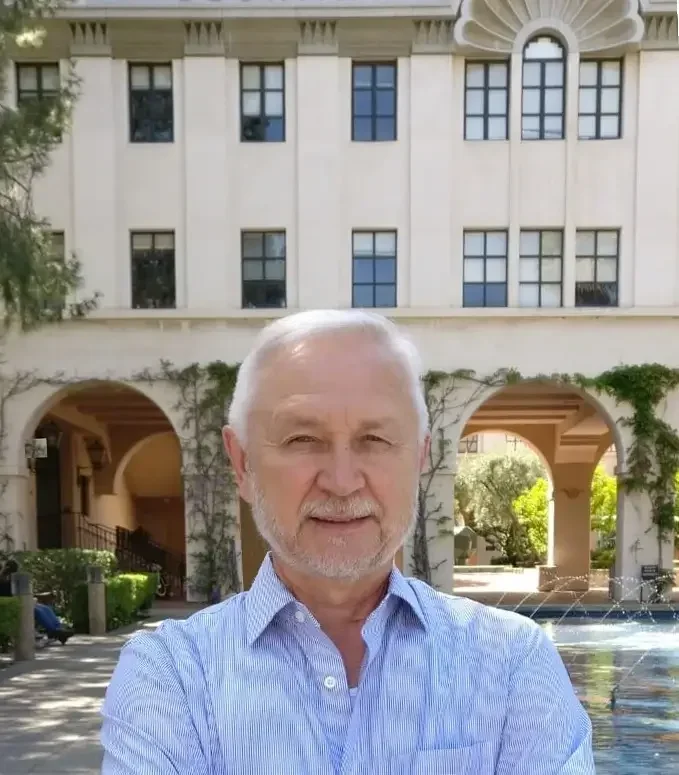
Boris Merinov
Lead Scientist, Director of Energy Conversion and Storage Technologies

Yue Zhou
Associate Professor, Texas A&M University
Luo, J., Yang, M. Y., Mu, Y., Yang, Z., Merinov, B. V., III, W. A. G., & Zhou, Y. (2025). Accelerating Polysulfide Redox Kinetics via the Metal–Insulator Interface in a Binder-Free Separator for Long-Life Lithium–Sulfur Batteries. *ACS Nano*, *19*(51), 42951-42963. https://doi.org/10.1021/acsnano.5c17793